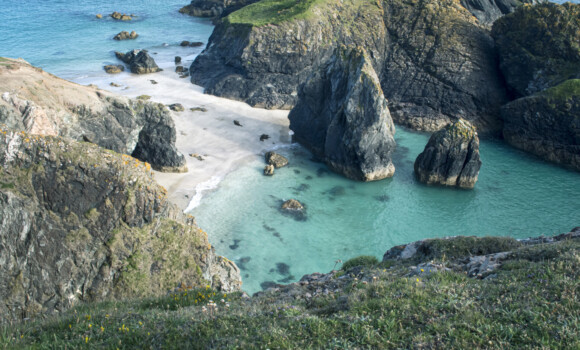
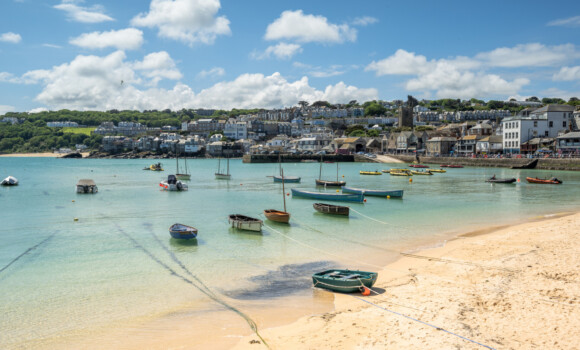
Picture this: you’ve just parked up, pulled on your sandals, and crested the coastal path, and there it is. A sweep of pale sand, water somewhere between green and turquoise, and the particular smell of Atlantic salt air that you only get in Cornwall. It doesn’t matter whether this is your first visit or your fifteenth. That moment never gets old.
Cornwall has more than 300 beaches. Choosing between them is genuinely one of the great pleasures of planning a Cornish holiday, but it can also feel overwhelming. Dramatic surf beaches sit alongside sheltered family coves. Hidden National Trust headlands give way to busy resort towns with cafés and lifeguards. Some of the best beaches in Cornwall are five minutes’ walk from a car park; others reward a forty-minute coastal hike.
We’ve spent decades helping guests find their perfect patch of Cornish coast, and this guide gathers eighteen beaches we think every visitor should know about. We’ve ordered them to tell a story of Cornwall’s coastline from the sheltered north of St Ives Bay down to the wild Lizard Peninsula and back up around the dramatic south coast. Dip in where it makes sense for your holiday, and don’t be afraid to follow a coastal path sign on a whim. That’s often where the best discoveries happen.
1. Porthminster Beach, St Ives
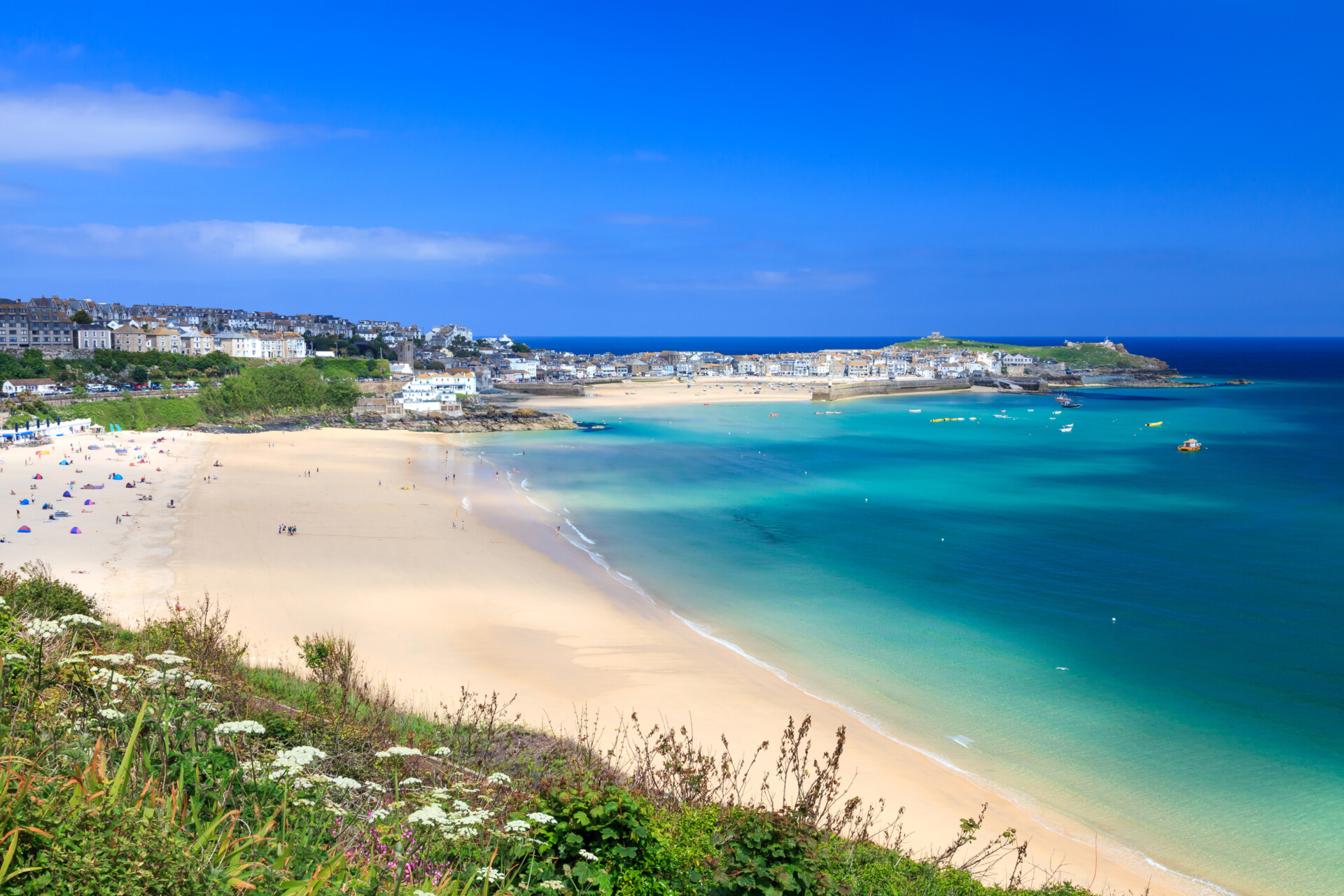
If you’ve ever pictured the archetypal Cornish beach, there’s a good chance you were picturing Porthminster. Sheltered beneath the town, facing south across St Ives Bay, it catches more sun than almost anywhere else on the north coast and the sea here genuinely does turn that improbable shade of turquoise on a clear day. The sand is soft and fine, the water shelves gently, and the famous Porthminster Beach Café sits right above the tide line so you can eat fresh seafood while watching your children scamper at the water’s edge.
Porthminster is one of four beaches that make St Ives so special as a base. Our full guide to St Ives beaches covers the practicalities for each one, including seasonal dog restrictions and parking. If you’re thinking of staying within walking distance of this beach, take a look at our luxury self-catering cottages in St Ives, several of our properties have harbour or bay views that will give you this scene at breakfast.
Best for: families, couples, and anyone wanting a beautiful beach with good facilities close to town.
2. Porthmeor Beach, St Ives
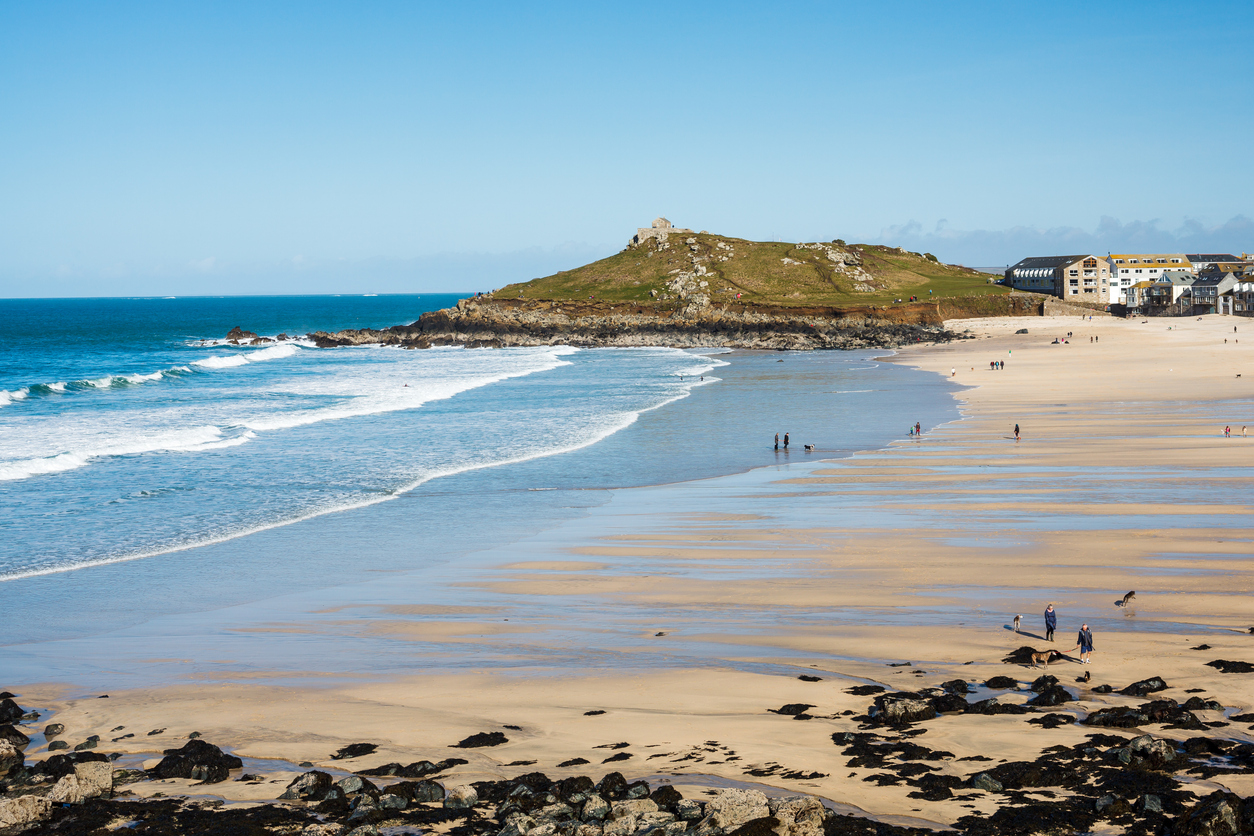
Porthmeor faces north and catches the Atlantic swell, which makes it a completely different character to its sheltered neighbour Porthminster. This is St Ives’ surf beach. The Tate St Ives gallery sits right above its western end, which means you can spend a morning looking at Barbara Hepworth-influenced sculpture and an afternoon watching longboarders ride clean lines in front of granite cliffs.
The beach is wide, the surf school operates here through summer, and the beach café serves good coffee and proper pasties. Lifeguard cover runs through the main season. Because the swell is more exposed, it’s worth checking conditions before young children paddle, but that’s part of what makes it so visually dramatic. You can find things to do in St Ives on our activities page if you want to plan a surf lesson alongside your beach day.
Best for: surfers, couples, art lovers combining gallery and beach.
3. Carbis Bay
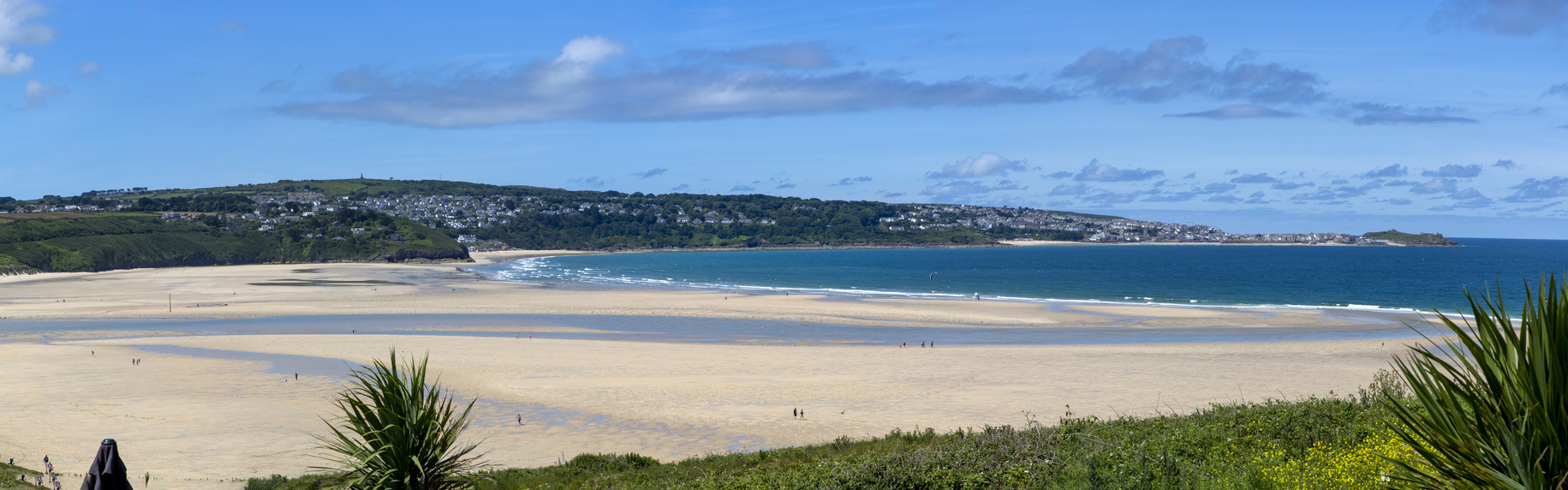
A ten-minute walk, or a short ride on the scenic St Ives Bay Line, brings you to Carbis Bay, a crescent of pale sand framed by wooded headland. The water here is famously calm compared to the north-facing beaches, and the bay gets excellent afternoon sun. It feels quieter than St Ives proper even at peak season, and the village above the beach has its own cluster of restaurants and a well-regarded hotel.
Carbis Bay is one of the better options for dog owners visiting outside peak summer months.
If you’re travelling with a four-legged companion and want somewhere to stay nearby, our dog-friendly holiday cottages in St Ives are all chosen with pets in mind. The Blue Flag rating Carbis Bay has earned in recent years reflects genuine quality: good water, well-maintained facilities, and reliable lifeguard cover.
Best for: families with very young children, dog owners (off-season), couples wanting peace close to St Ives.
4. Sennen Cove
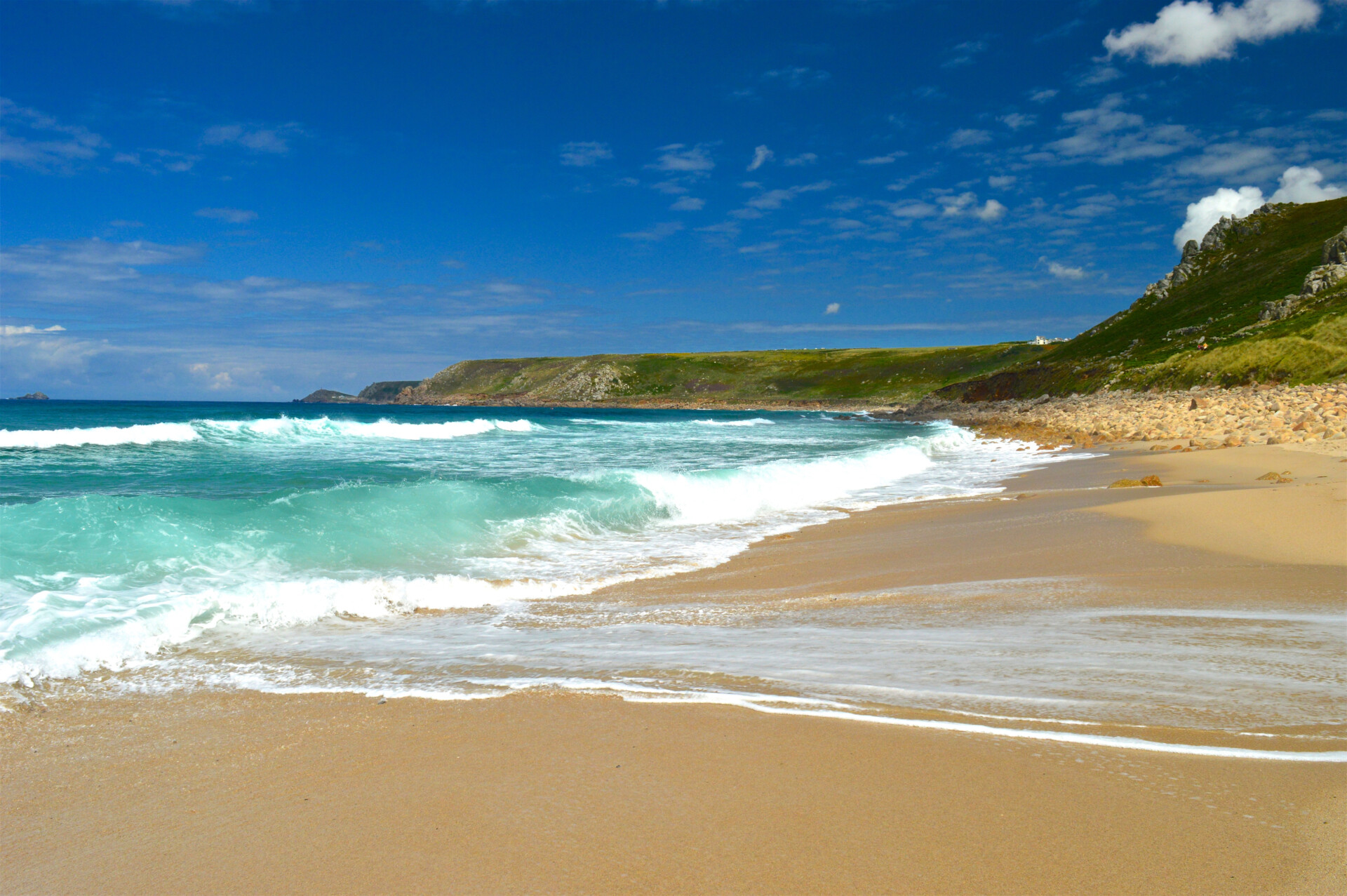
Drive towards Land’s End and you’ll find Sennen. Turn left just before the tourist complex of Land’s End and drop down to one of the most exhilarating beaches in Cornwall. Sennen Cove is a broad mile of west-facing sand with powerful Atlantic surf rolling in, backed by whitewashed fishermen’s cottages and a lifeboat station. On a big swell day, the surf here is spectacular to watch even from the slipway.
The Sennen Cove Surf School is well-established, the Beach Restaurant does reliably good fish and chips, and the village has an authenticity that’s hard to manufacture. Lifeguards patrol the main swimming area through summer. It can get busy in August, but arrive early and you’ll feel like you have the whole Atlantic to yourself. The South West Coast Path Association’s official trail guide maps a wonderful walk north from Sennen along the cliffs towards Cape Cornwall if you want to work up an appetite first.
Best for: surfers, walkers, and anyone who wants to stand at England’s most westerly beach and feel appropriately windswept.
5. Porthcurno
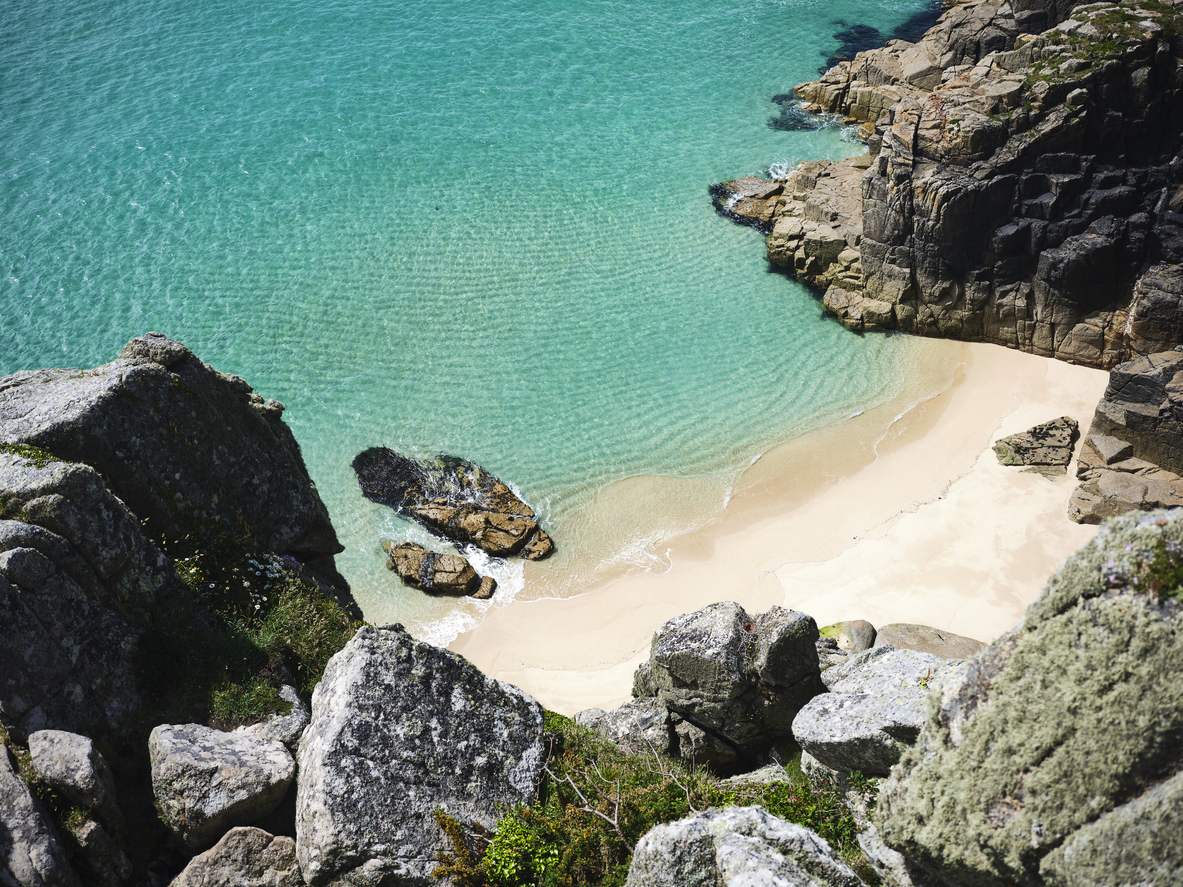
Porthcurno is the beach that routinely appears on shortlists for the best beaches in Cornwall, and once you see it you understand why. The sand here is brilliant white, ground fine by the action of Atlantic waves over centuries. The water in the bay takes on the colour of the Maldives on a sunny day, electric blue close to the shore, deepening to a rich teal further out. Granite headlands enclose the bay on both sides and the Minack Theatre perches dramatically on the cliff to the west.
It’s not the easiest beach to reach (a steep path down from the car park), but that’s part of what keeps it beautiful. The water quality is consistently excellent, as documented in the UK Government bathing water quality report for Cornwall. Go mid-week in June or September and the experience is close to perfection.
Best for: couples, photographers, and anyone who wants genuinely Caribbean-coloured water without leaving England.
6. Kynance Cove
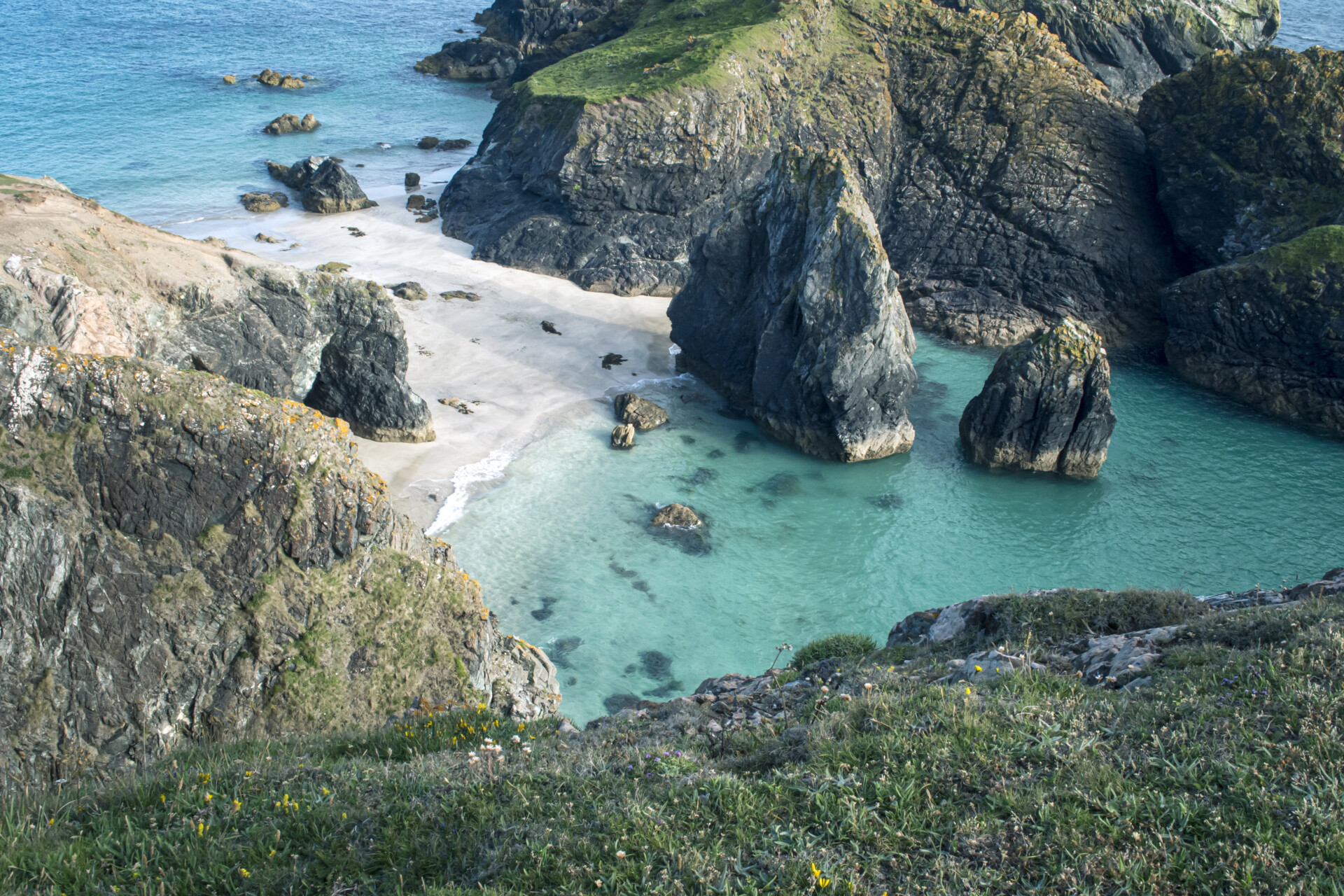
Kynance Cove is one of those places that can make even a committed sceptic reach for their camera. The serpentine rock formations are unlike anything else on the Cornish coast. Stacks of green and red-veined stone rise from creamy white sand, and the sea rushes through sea caves and arches in a constant, churning theatre of foam and colour. It sits on the Lizard Peninsula, the most southerly point of mainland Britain, managed by the National Trust.
“Kynance is one of those places that changes with every tide. The caves are only accessible at low water, so it rewards guests who check the tides and time their visit carefully.”
Timing is genuinely important here. At high tide much of the sand is submerged. At low tide the cove opens up into a magical landscape of sandy channels and rock pools. Check the tide tables before you go and allow at least two hours. The Kynance Cove page on the National Trust website has tide guidance, wildlife information, and practical visitor notes that are well worth reading in advance.
Best for: adventurous explorers, photography enthusiasts, families with older children who love rock pooling.
7. Perranporth
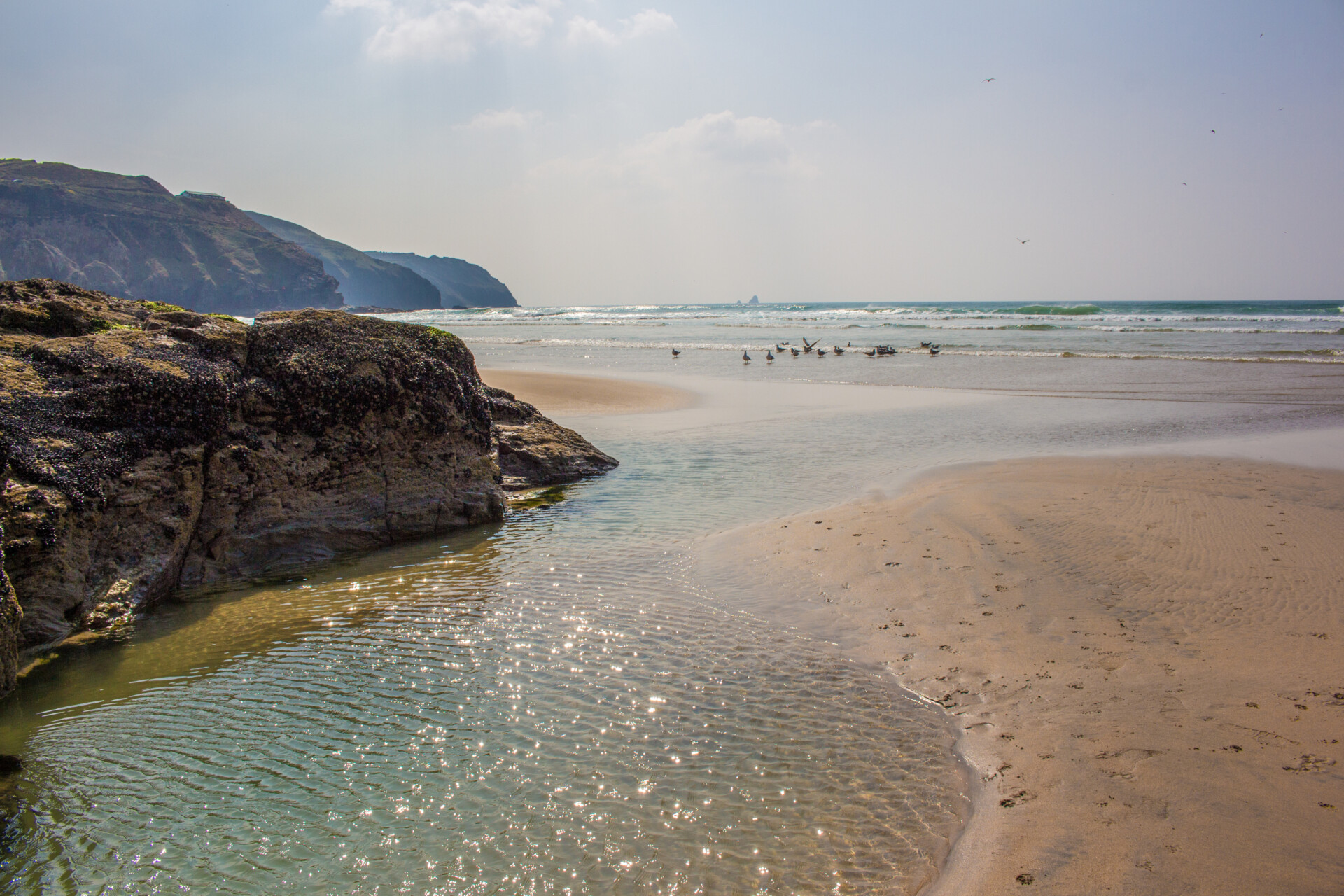
Some beaches are charming. Perranporth is simply vast. Three miles of unbroken sand stretch north from the village, backed by dunes that have been there since the Bronze Age. On a busy August day, Perranporth absorbs the crowds effortlessly because there’s so much of it. The surf is consistent and often excellent, which is why there’s a lively surf culture here and a well-regarded surf school on the beach.
The village itself is cheerful and unpretentious, with the kind of seaside shops, fish and chip cafés, and cream tea spots that feel genuinely earned rather than performative.
Perranporth Airfield sits nearby, and you can occasionally watch microlights and gliders taking off with the coast spread out below them. Lifeguard cover operates on the main beach through summer. Dog walkers should note that restrictions apply to parts of the beach in season, but three miles leaves plenty of room for everyone.
Best for: surfing families, groups of friends, anyone who wants serious space and good consistent waves.
8. Fistral Beach, Newquay
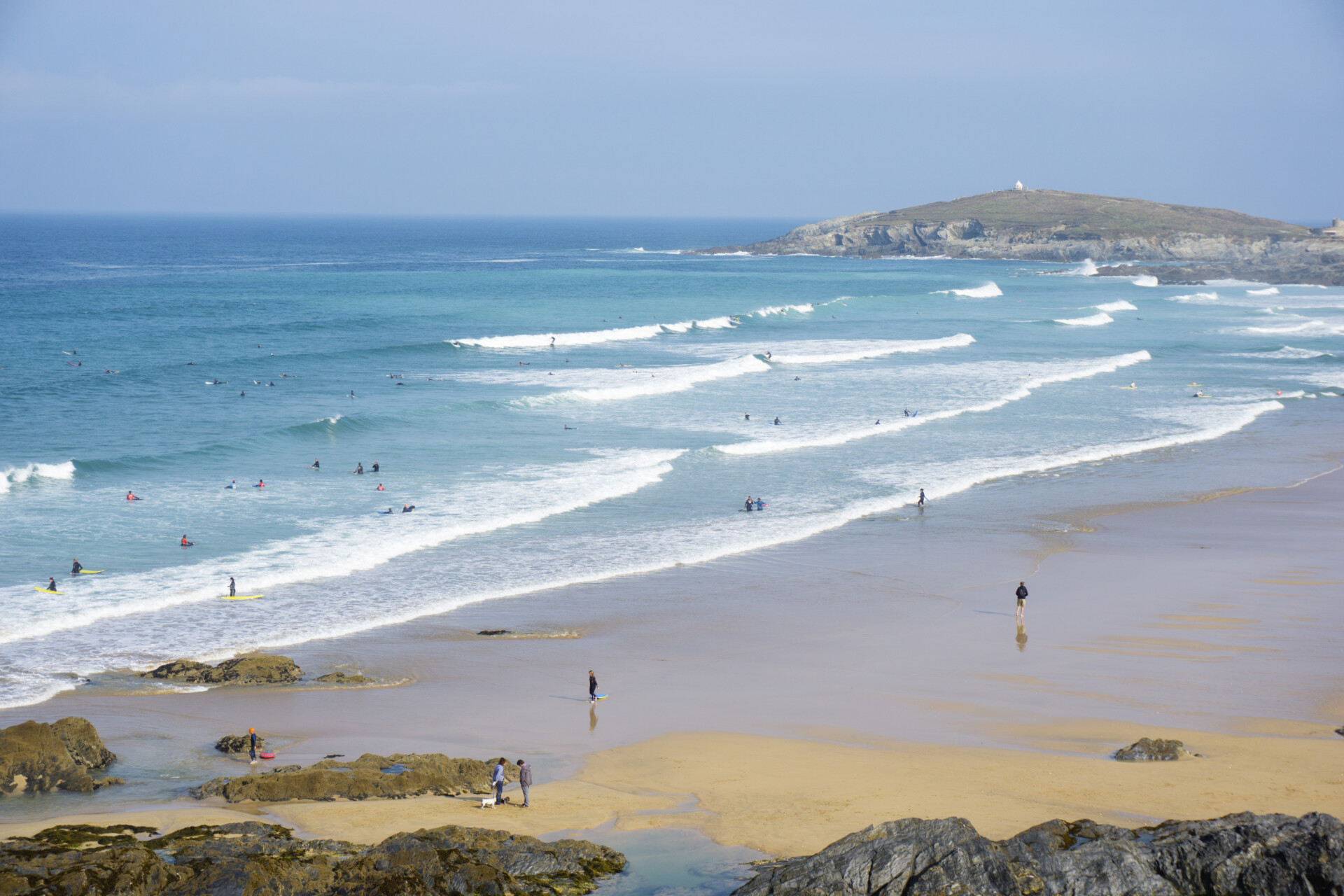
No list of the best beaches in Cornwall is complete without Fistral. This is the most famous surf beach in Britain, host to the Boardmasters festival and the Rip Curl Boardmasters surf competition. The beach faces directly into the prevailing Atlantic swell, producing consistent, powerful waves that draw surfers from across Europe. Even if you’ve never been on a board, there’s something undeniably energising about standing on the dunes at Fistral and watching serious surfing happen in front of you.
The beach has full facilities through the season: lifeguards, surf hire, lessons, beach cafés, and a well-known surf bar at the northern end. It gets very busy in July and August. Come in May, September, or October and you’ll see the same waves with fewer bodies in the water. Fistral also holds Blue Flag status recognised by Cornwall Council, reflecting strong water quality and well-managed facilities.
Best for: surfers of all levels, surf spectators, groups looking for a lively beach atmosphere.
9. Watergate Bay
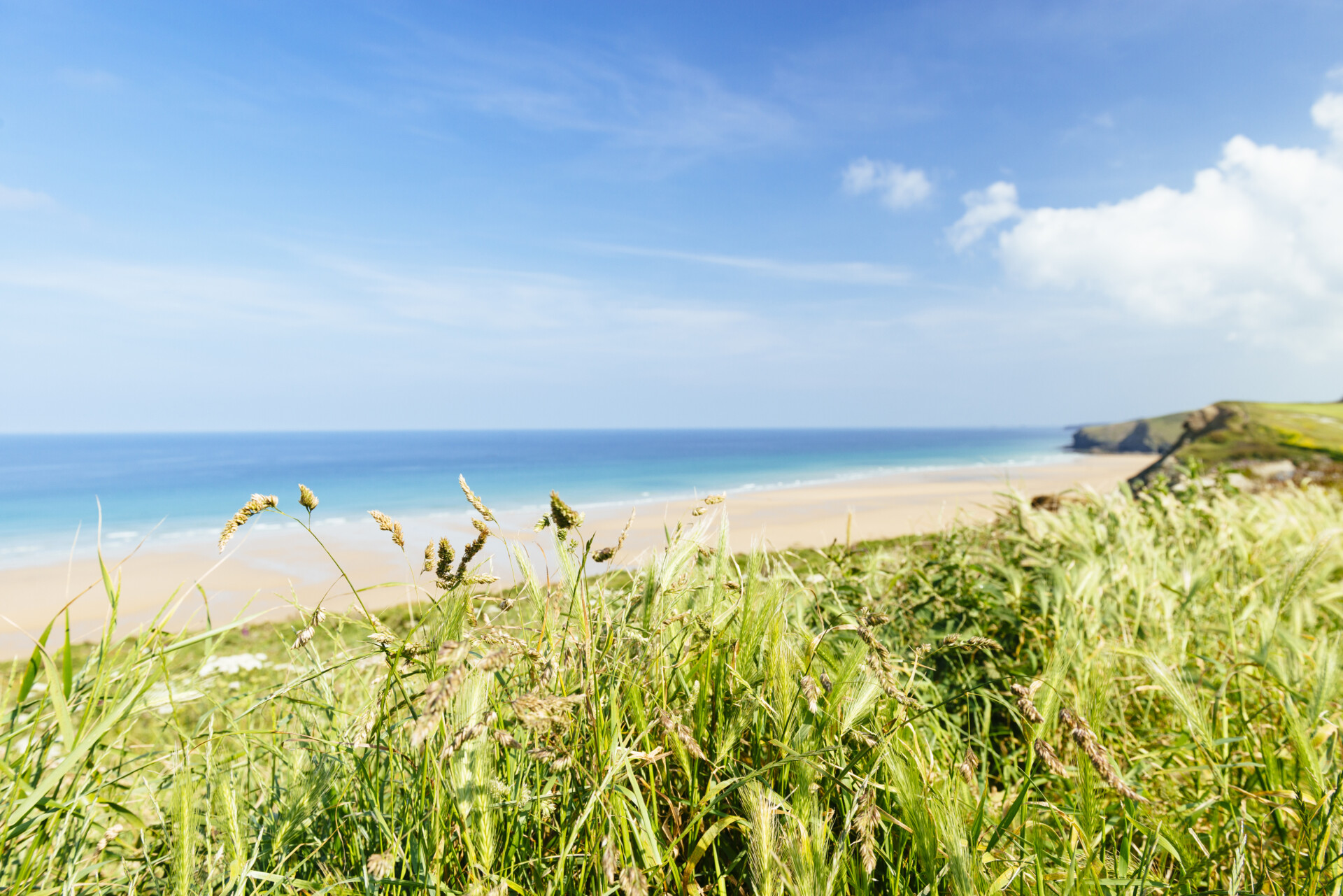
Watergate Bay sits just north of Newquay and manages to feel like a completely different world. Two miles of wide, flat sand, with the Extreme Academy surf and watersports school at its heart and the famous Watergate Bay Hotel perched on the clifftop above. It’s a beach that does active holidays particularly well: kite surfing, surfing, stand-up paddleboarding, and coasteering are all available here, and the beach café has a well-deserved reputation for good food.
The beach is exposed and can be windy, which is precisely why the kite surfers love it. When the sun is out and the wind is up, the spectacle of coloured kites pulling riders across the bay is genuinely impressive. The sand is firm and flat at low tide, making it good for running, cricket, and the kind of aimless beach wandering that somehow uses an entire afternoon.
Best for: active families, watersports enthusiasts, couples who want good food alongside their beach day.
10. Mawgan Porth
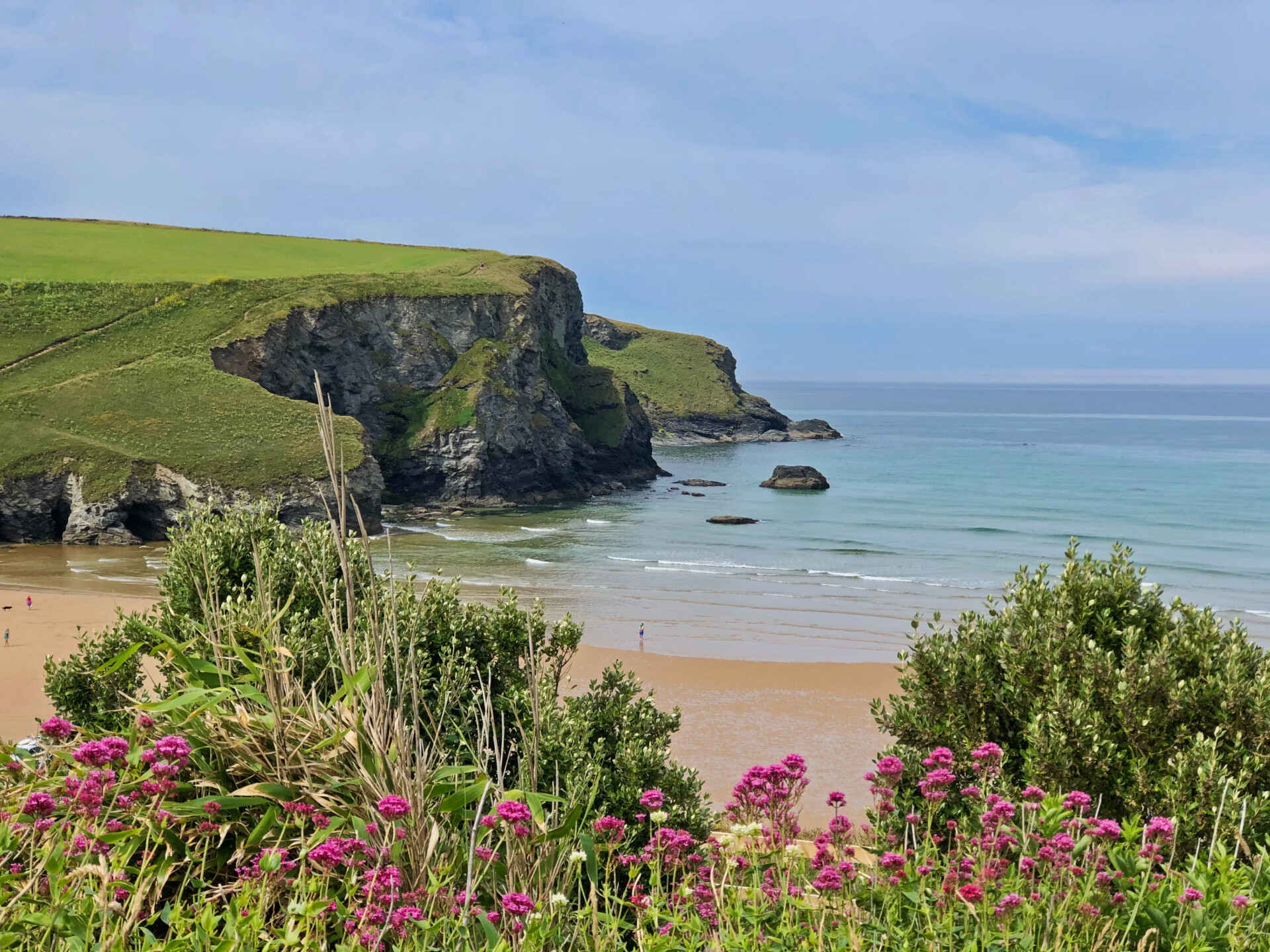
Mawgan Porth is a local favourite and, compared to some of the beaches nearby, still relatively unhurried. The beach sits at the mouth of the Vale of Lanherne, a green river valley that runs down to the sea, and it gives the whole place a sheltered, tucked-away feel. The sand is wide and sandy at low tide, the surf is beginner-friendly in smaller conditions, and the village above the beach has a handful of good places to eat and a reliable car park.
Families return to Mawgan Porth year after year. There are rock pools at the northern end of the beach, lifeguard cover through the summer season, and a relaxed local atmosphere that feels very different to the larger resort beaches. It’s also one of the quieter options even in August, simply because it sits slightly off the most-trodden tourist trail. Get there early in high summer for a good spot.
Best for: families with young children, beginners wanting a gentler surf experience, anyone who values a calmer atmosphere.
11. Harlyn Bay
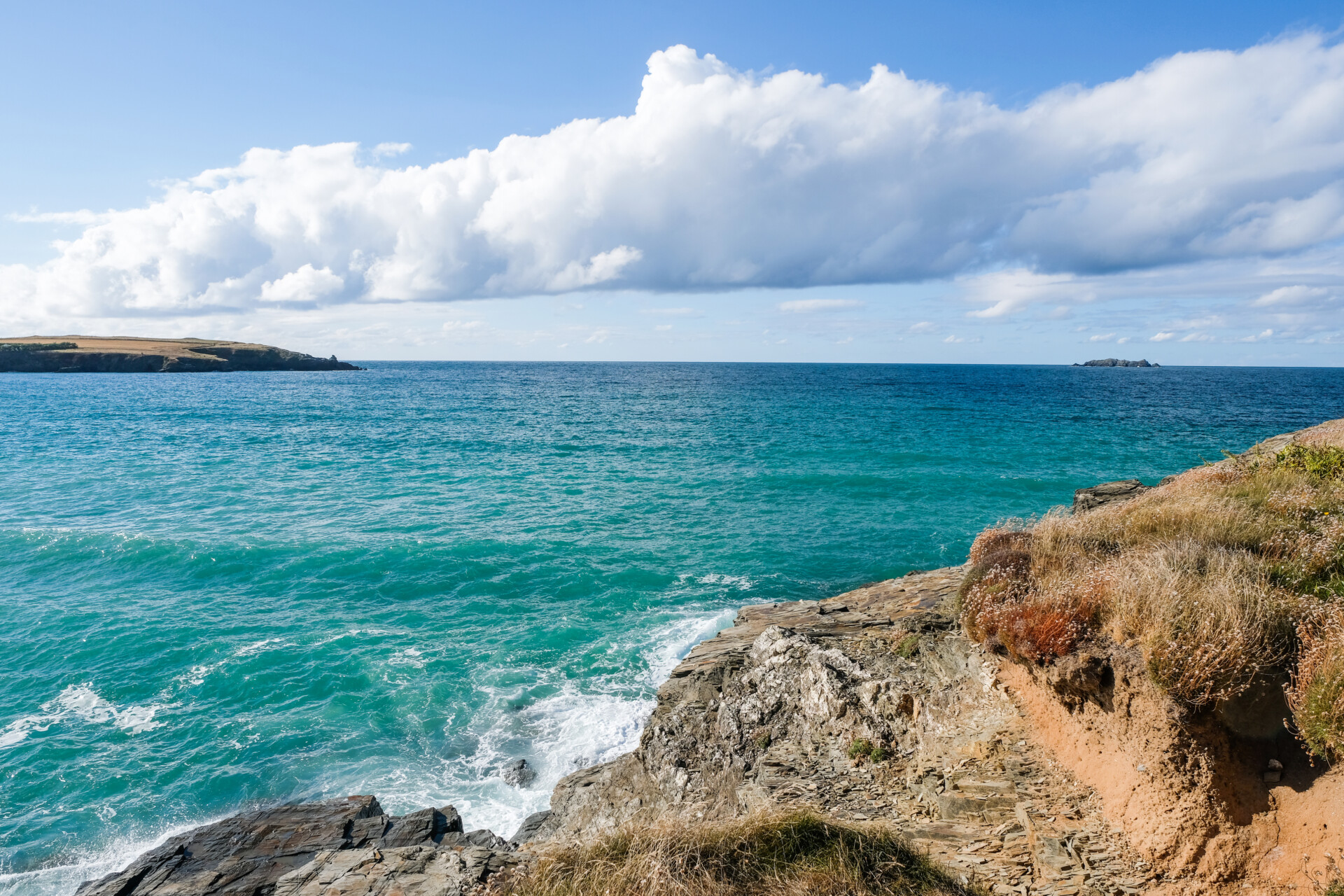
If the surf is too big everywhere else, Harlyn Bay is often the answer. It faces north-east, which means it’s sheltered from the prevailing south-westerly swell and tends to produce cleaner, smaller waves even on days when other beaches are a churning mass of white water. This makes it a consistent favourite for families with younger children and for beginner surfers who want manageable conditions rather than a washing machine experience.
The beach is sandy, the water quality excellent, and there’s a surf school, beach café, and lifeguards through the main season. Harlyn sits close to the old walled town of Padstow, which makes it easy to combine a beach morning with an afternoon exploring the estuary and eating Rick Stein’s fish and chips. The drive between the two takes about ten minutes along narrow Cornish lanes, so factor that into your planning.
Best for: beginners, families with toddlers, anyone wanting reliable calm conditions on a swell-heavy day.
12. Polzeath
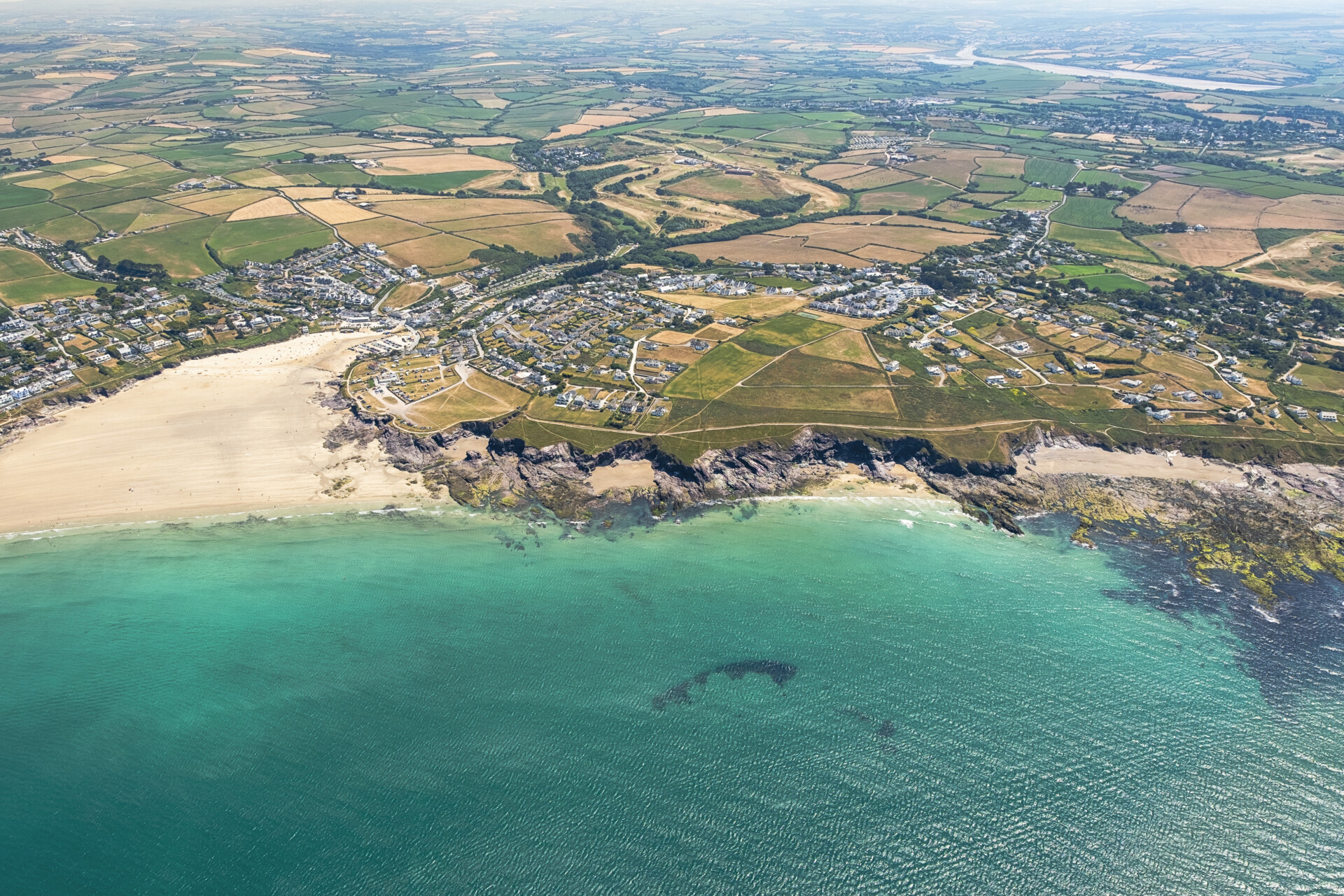
Polzeath has been a surf destination for decades, loved by families who come back every year and increasingly well-known beyond Cornwall too. The beach sits in the Camel Estuary hinterland, north-east facing like Harlyn, and catches consistent surf that is generally more forgiving than Fistral or Sennen. The village above the beach has grown substantially, there are good cafés, an excellent ice cream shop, and a cluster of surf hire and lesson providers.
Good to know: Polzeath can feel very busy at peak times in July and August. Parking fills early. Aim to arrive before 10am in high summer or you may find yourself queuing for a space on the approach road.
The beach has a strong community feel. Lifeguard cover runs through summer, the surf school has an excellent record with beginners, and the combination of reliable surf, good facilities, and easy access makes it one of the most complete family surf beaches in Cornwall. It’s also a good starting point for the coastal path around Pentire Point.
Best for: surfing families, groups, anyone wanting a lively beach with consistent but manageable waves.
13. Daymer Bay
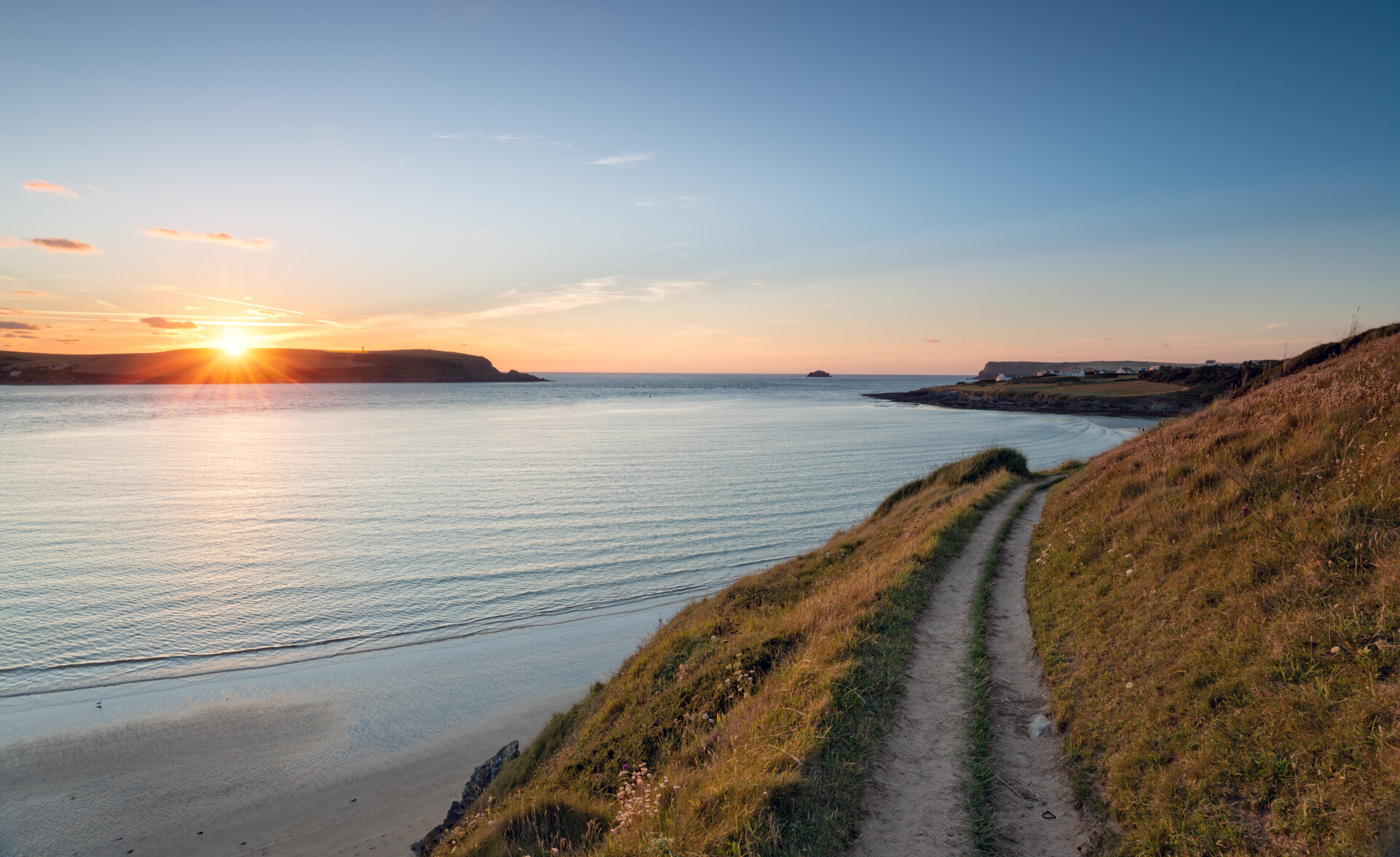
Just around the headland from Polzeath, Daymer Bay is a completely different proposition. It’s a tidal estuary beach, where the Camel Estuary meets the open sea, and the result is shallow, warm (relatively speaking) water, no surf to speak of, and a sheltered sandy crescent that’s perfect for young children. The National Trust owns the land above the beach, which keeps the surroundings beautifully unspoilt.
Daymer is the beach John Betjeman wrote about. He spent his childhood holidays here and is buried just up the hill in the churchyard of St Enodoc, surrounded by dunes. That literary connection adds a quiet layer of interest, and the church itself, half-buried in the dunes until Victorian restoration, is worth the short walk. The beach has no lifeguard cover, so it’s best for confident swimmers and families who are happy to supervise closely.
Best for: toddlers and very young children, picnic days, visitors who appreciate a quieter, more literary atmosphere.
14. Porthleven Sands
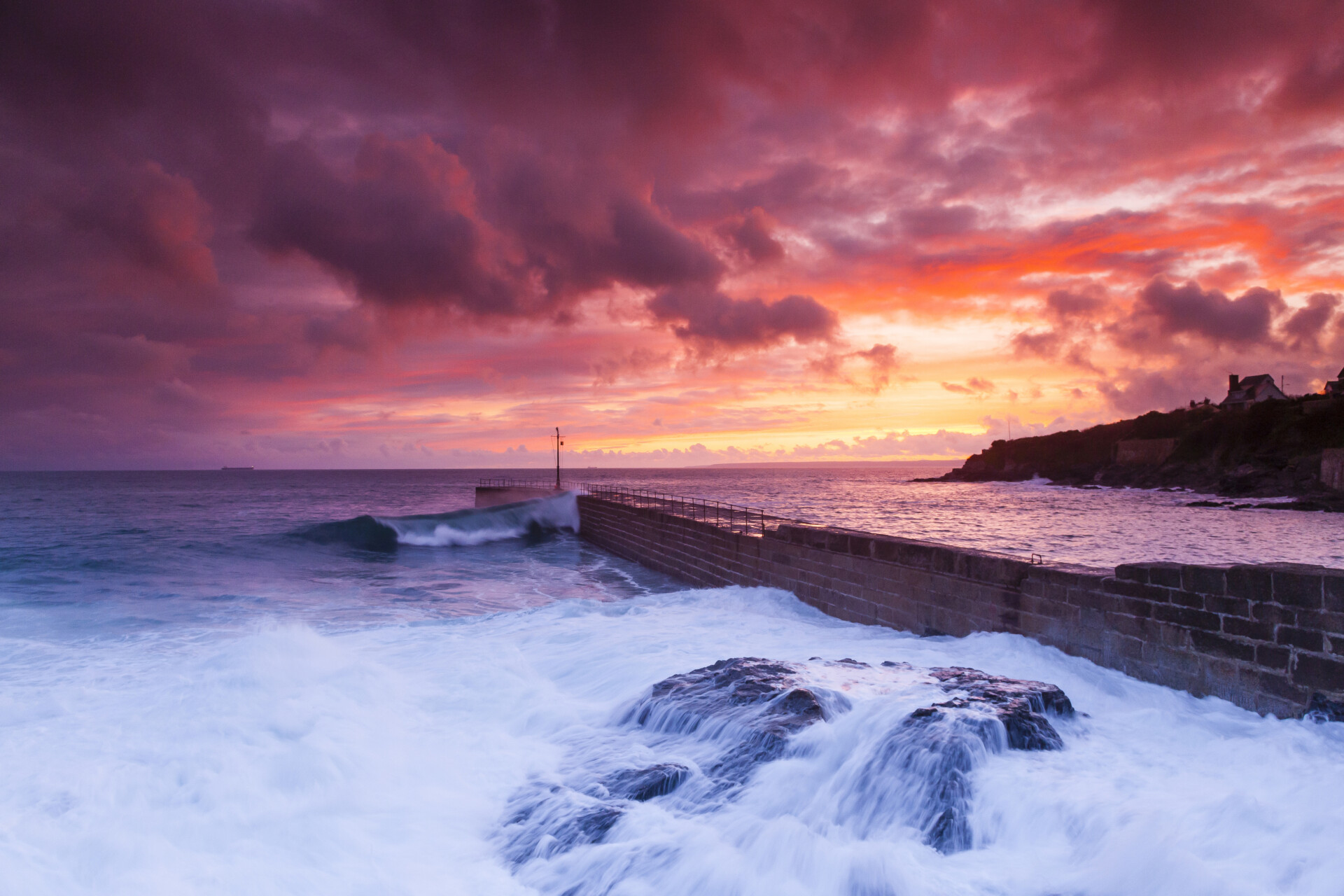
Porthleven sits on the south coast, between Helston and the Lizard, and feels genuinely different to the north coast beaches. The harbour is active and working, the swell wraps around from the south-west and can be powerful, and the town itself has quietly become one of Cornwall’s most interesting places to eat, with a string of restaurants and delis making good use of the surrounding farms and sea. Porthleven Food Festival each spring is now firmly on the Cornish calendar.
The beach south of the harbour is a stretch of shingle and sand that’s popular with body boarders and surfers when conditions are right. In big storm swells, Porthleven produces some of the heaviest and most dangerous waves in Cornwall, impressive to watch from the harbour wall, absolutely not for swimming. In calmer conditions it’s a lovely beach with the town immediately behind it. Check conditions before heading in.
Best for: foodies combining beach and brilliant local restaurants, experienced surfers and body boarders in suitable conditions.
15. Praa Sands
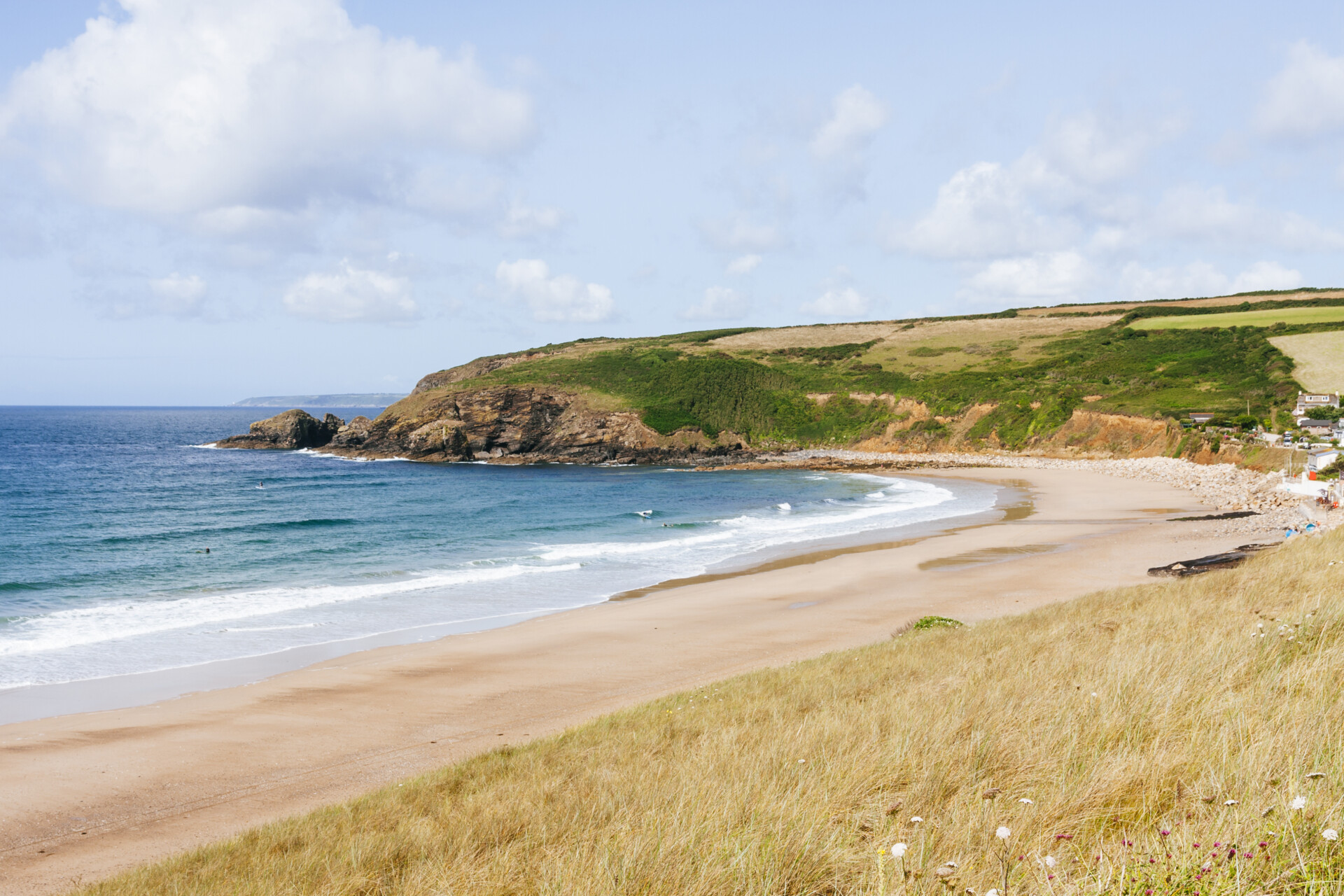
Praa Sands is a long, wide, relatively flat beach on the south coast between Porthleven and Marazion, and it has a devoted local following that’s slightly out of proportion to its profile in the wider beach guides. The sand is fine and golden, the beach faces south so it catches good afternoon sun, and the surf is generally more manageable than the exposed north coast breaks. There’s a good beach café, lifeguard cover in season, and a relaxed village atmosphere.
It’s also one of the better south coast options for dog owners, with a less restricted beach access than many during the shoulder season. The drive from St Ives takes around thirty to forty minutes, which makes it a viable day trip if you want to explore beyond the immediate bay.
The Keep Britain Tidy Blue Flag and Seaside Award criteria that beaches are assessed against, covering water quality, safety, environment, and management, are reflected in Praa Sands’ consistent good standing.
Best for: families, dog owners (off-season), anyone wanting a south-facing beach with reliable facilities.
16. Marazion and Mounts Bay
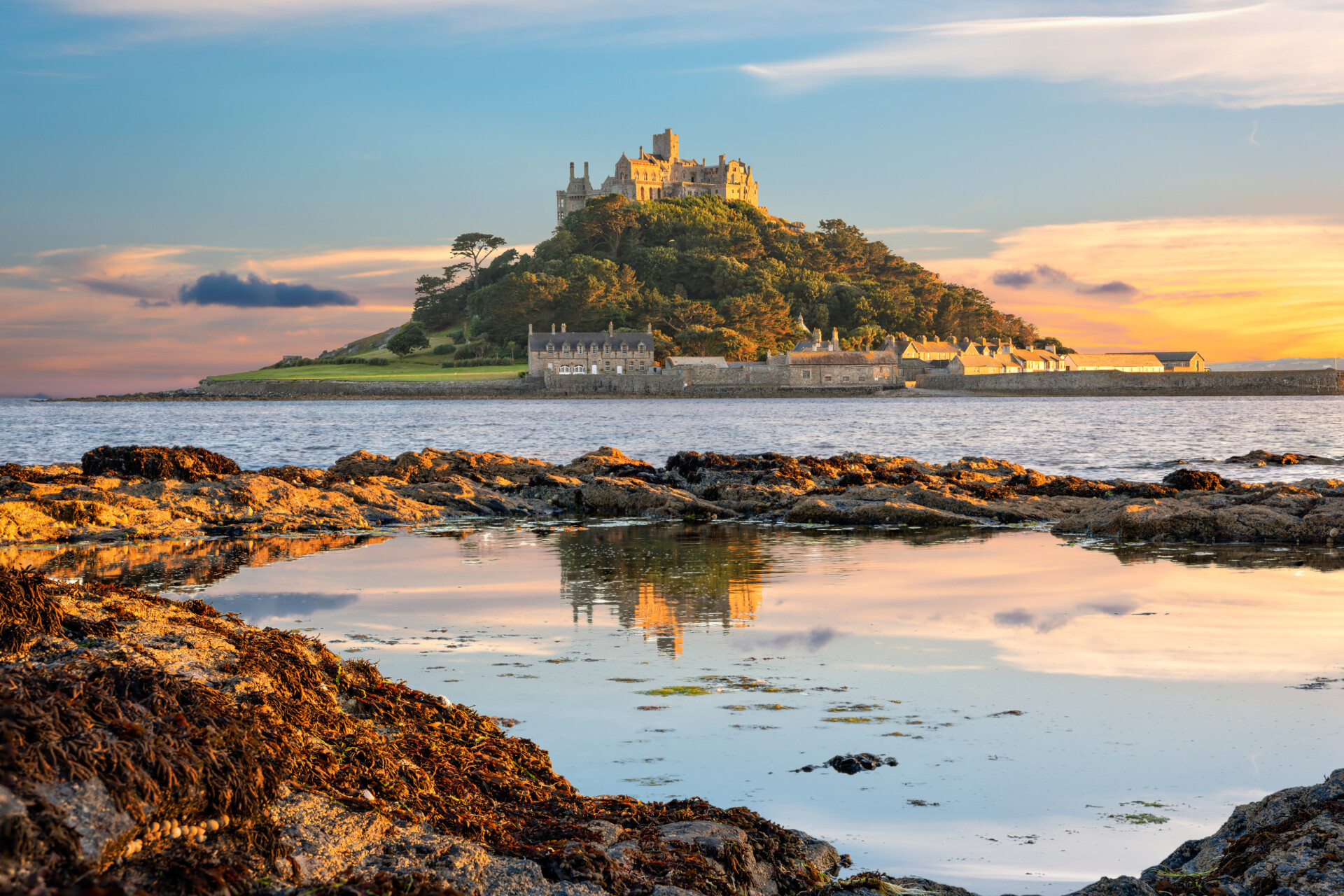
Marazion is the oldest chartered town in Britain and sits across the tidal causeway from St Michael’s Mount, that unmistakable island castle that appears on half the postcards sold in Cornwall. The beach at Marazion is a long, east-facing stretch of sand and shingle that gives you the singular experience of swimming in the English Channel with a medieval island monastery in your eyeline. It’s not the most dramatic swimming beach, but it has a gentle, timeless quality that’s very appealing.
Good to know: At low tide you can walk across the causeway to St Michael’s Mount. At high tide a small ferry operates (seasonal). Check tide times and National Trust opening hours before you visit to avoid disappointment. Note that you can only take your dog to the village on St Michael’s Mount, not the castle itself.
Windsurfers and kitesurfers use Marazion regularly because of the reliable wind in the bay. There’s a pleasant café strip along the main street above the beach, and the whole setting, wide bay, island castle, the long curve of sand towards Penzance, is genuinely beautiful, particularly in evening light.
Best for: history lovers, windsurfers, families wanting a beach with an added attraction in the form of St Michael’s Mount.
17. Loe Bar
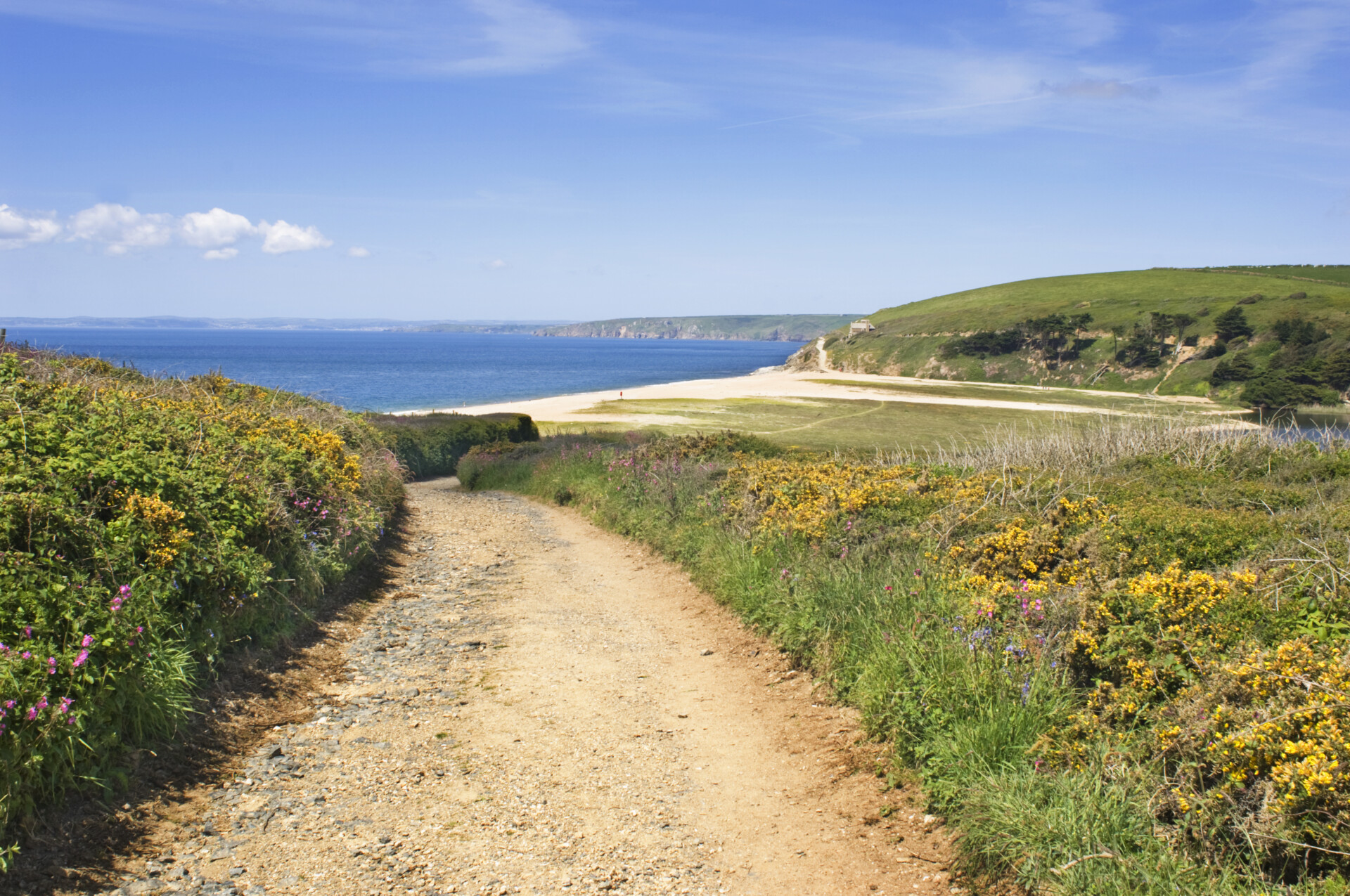
Loe Bar is not a typical beach and that’s precisely what makes it worth knowing about. It’s a narrow bar of shingle and sand that separates Loe Pool, Cornwall’s largest natural freshwater lake, from the sea. The landscape here is wild and slightly otherworldly: the barrier beach on one side, the reedy freshwater lake on the other, and the Atlantic pounding the shingle in between. It’s managed by the National Trust and gets significantly fewer visitors than more accessible beaches.
Swimming is not recommended at Loe Bar because of dangerous currents and the power of the waves, but as a place to walk and drink in the landscape, it’s remarkable. The coast path here is part of the South West Coast Path’s official trail, and a circular walk taking in the bar, the lake edge, and the wooded valley above makes for a memorable few hours. Bring a flask.
Best for: walkers, birdwatchers, anyone wanting somewhere genuinely wild and largely uncommercialized.
18. Porthcurnick Beach, Portscatho
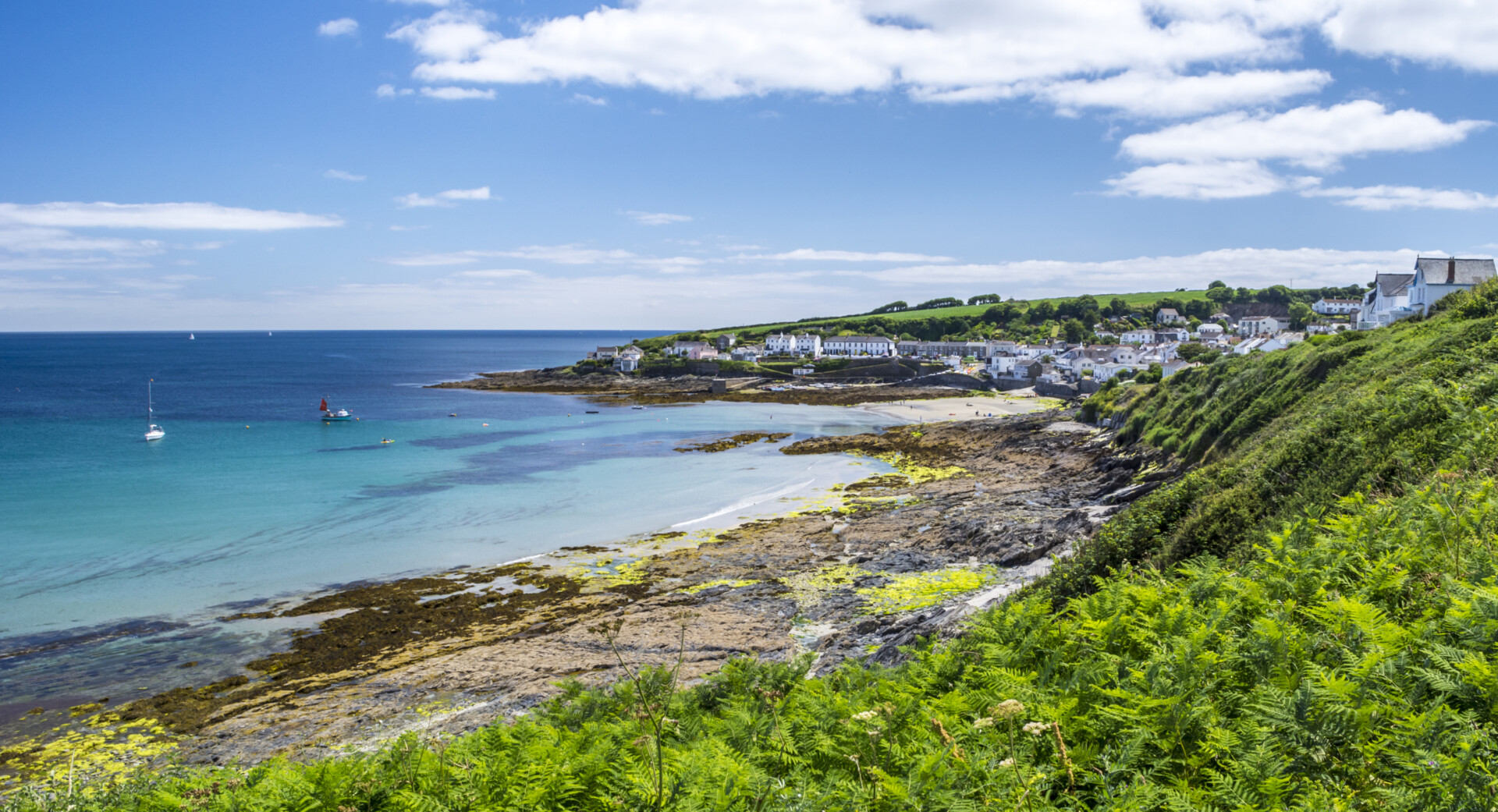
We end with a beach that acts as a reminder of what Cornwall can still offer even in an age of travel blogs and Instagram highlights: somewhere quietly lovely, not overrun, and genuinely worth the effort of finding. Porthcurnick sits on the Roseland Peninsula, one of Cornwall’s most beautiful and least-visited stretches of coast, reached by a short walk from the village of Portscatho. The beach is sheltered, south-facing, and almost entirely unspoilt.
There’s a legendary beach café, the Hidden Hut, which operates communal feast nights in summer that sell out within minutes of going online. On a clear day, the view across Gerrans Bay to the Dodman is the kind of Cornish panorama that makes you quietly resolve to come back next year. The Roseland is also accessible by ferry from Falmouth and Truro, which makes it possible to visit without a car if you’re prepared to plan ahead. It deserves to be far better known and, at the same time, we’re slightly glad it isn’t.
Best for: couples, foodies chasing the Hidden Hut feast nights, anyone who wants to feel like they’ve discovered a corner of Cornwall for themselves.
How to choose the right beach for your holiday
With eighteen beaches on the list, the choice can feel as overwhelming as the original 300. Here’s a quick way to narrow it down.
You’re travelling with young children
Prioritise Porthminster, Carbis Bay, Mawgan Porth, Harlyn Bay, or Daymer Bay. All offer calm or manageable water, lifeguard cover in season, and good facilities nearby.
You want to surf
Fistral, Sennen, Polzeath, Perranporth, and Watergate Bay are the headline options. Harlyn and Mawgan Porth suit beginners wanting smaller, cleaner conditions.
You’re travelling with a dog
Seasonal restrictions apply widely, but Carbis Bay, Praa Sands, and Loe Bar offer more flexibility, particularly outside the peak summer months. Always check locally. Our dog-friendly holiday cottages in St Ives page has practical guidance on where to stay and what to expect.
You’re after somewhere truly spectacular
Kynance Cove and Porthcurno consistently top people’s lists. Both require a bit of effort to reach and reward it handsomely.
You want to combine beach with food and culture
St Ives (Porthminster and Porthmeor), Porthleven, and Porthcurnick offer the best combination of brilliant beaches and genuinely good places to eat.
One practical note on water quality: Cornwall’s beaches are among the cleanest in England. The UK Government bathing water quality report for Cornwall confirms that 98% of Devon and Cornwall’s monitored bathing waters meet or exceed minimum standards, and many exceed them significantly. That said, water quality can be affected by heavy rainfall events, so checking the relevant beach’s current status before you swim is always sensible.
“The best beaches in Cornwall aren’t just beautiful, they’re safe, well-managed, and genuinely looked after. That combination is rarer than you might think, and it’s one of the things that keeps people coming back year after year.”
For more ideas on how to fill your days beyond the beach, our things to do in St Ives guide covers galleries, harbour boat trips, coastal walking, and everything in between. And if you’re reading this in winter and starting to plan, our St Ives travel tips and local news page keeps you up to date with events, seasonal changes, and the occasional tip from our team on the ground.